The legendary Jeep 4.0L inline-six is known for its bulletproof reliability and off-road torque, but its factory exhaust system is a major bottleneck. Restrictive manifolds, crush-bent pipes, and a muffler that prioritizes silence over flow choke the engine's natural breathing. Upgrading your XJ's exhaust is one of the most rewarding modifications you can make—it unlocks hidden horsepower, improves throttle response, and replaces the wheezy stock note with a satisfying, authoritative growl. Here is everything you need to know about choosing and installing a performance exhaust on your Cherokee XJ.
Choosing Your Exhaust Components
A complete exhaust upgrade typically addresses three areas: the header (exhaust manifold), the catalytic converter, and the cat-back system. Starting at the engine, a stainless steel header replaces the factory cast manifold, which is prone to cracking. Short-tube headers with 1.5-inch mandrel-bent tubing and 304-grade stainless steel construction offer increased horsepower, torque, and throttle response while producing a more aggressive exhaust note . For the rear section, a cat-back system is the most common upgrade. The Banks Power Monster Exhaust is a standout choice, featuring a 2.5-inch stainless mandrel-bent tailpipe and a straight-through Monster muffler. In performance testing, this muffler flowed 543.2 cfm at 1 psi—compared to the stock exhaust's mere 260.0 cfm—representing a 108% improvement in airflow . This dramatic reduction in backpressure translates directly into noticeable power gains, with owners reporting that their XJ "couldn't get out of its own way before, but now that gas pedal actually gets me somewhere" .
Installation Considerations
Installing a cat-back exhaust on an XJ is a straightforward DIY project for anyone comfortable with hand tools. The Banks system, like many aftermarket kits, includes all necessary hardware and follows the OEM routing while offering improved clearance around shocks and suspension components . However, there are common pitfalls to avoid. Users report that achieving a good seal at connection points can be challenging, and welding the joints is the best option for a leak-free install . Leaving leaks in the system can rob performance, impact the exhaust note, and actually accelerate corrosion . When cutting your old exhaust off, be conservative—one installer noted that chopping off too much of the stock pipe required an extension piece to make up the difference . If you have a pre-1991 XJ, ensure compatibility with your model year, as catalytic converter configurations vary.
The Sound Profile
One of the primary motivations for an exhaust upgrade is auditory. The 4.0L inline-six has a unique voice—it is not a V8, and trying to make it sound like one will only lead to disappointment. The best systems deliver a "deep rumble" that is "only slightly louder than stock" but with a much richer, more satisfying tone . Flowmaster's FlowFX system, for example, offers a "moderate deep powerful sound" with mandrel-bent tubing that tucks up high to avoid trail damage . The key is finding a system that is "throaty and authoritative yet civil"—loud enough to announce your presence on the trail but quiet enough for daily driving without droning .
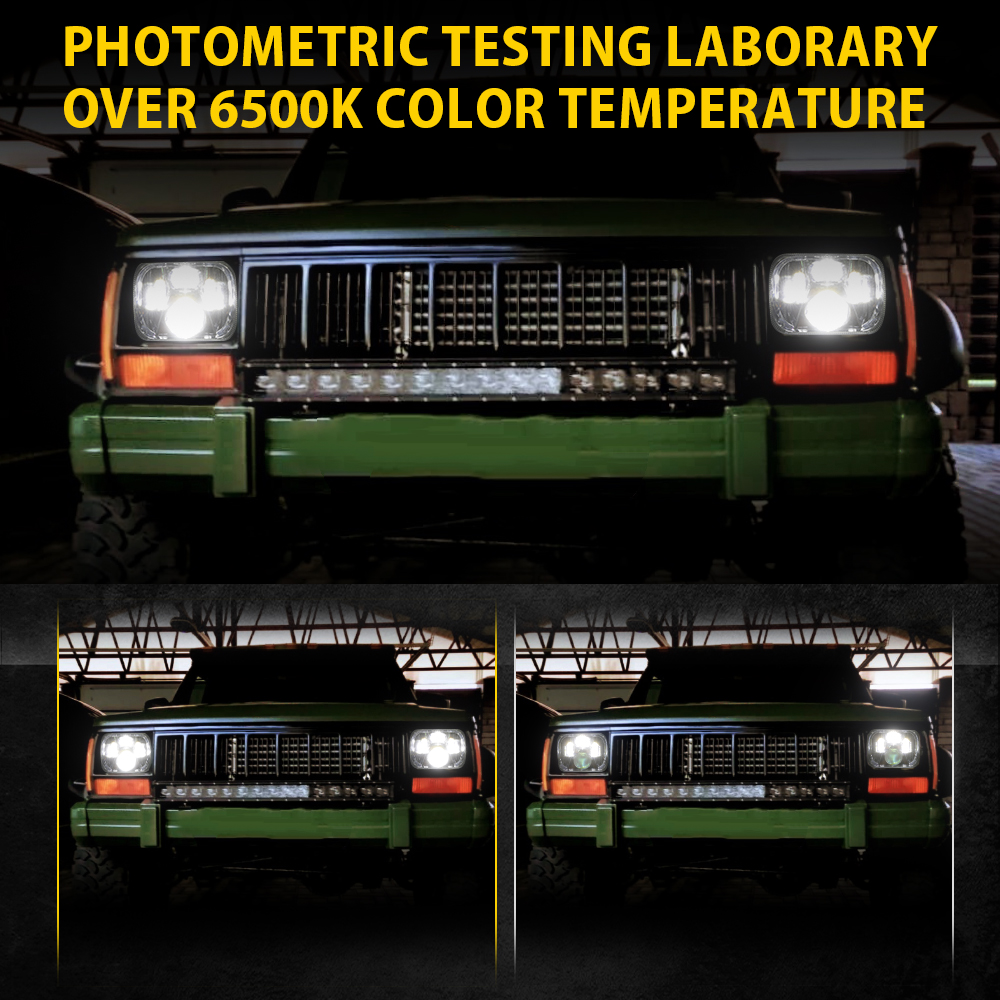
One of the most overlooked, yet critically important, connections in any XJ project is between your engine modifications and your headlights. You might wonder what an exhaust system has to do with lighting, but the answer lies in the XJ's famously undersized electrical system. Upgrading your exhaust improves engine breathing and efficiency, but it also often correlates with other performance modifications—like higher-output alternators and upgraded wiring—that directly impact your headlights. The factory Jeep Cherokee XJ headlight wiring is notoriously inadequate, suffering from voltage drop that leaves your lights dim even when the engine is running well . Many XJ owners who dive into performance upgrades discover that their new exhaust's benefits are overshadowed by the inability to see at night. The solution is straightforward: install a headlight relay harness (such as the Putco or eAutoWorks H4 upgrade harness for around $35) that draws power directly from the battery rather than routing the full current through the dashboard switch . This modification, often done alongside a switch to Autopal E-code housings and H4 bulbs, delivers full voltage to your headlights and eliminates the dim, yellowish glow of sealed beams . The improvement is dramatic—owners describe it as "huge improvement over stock" and "plenty bright with good beam pattern" . A proper headlight upgrade ensures that after you finish dialing in your exhaust tone, you can actually see where you are driving when you take your newly powerful XJ out for a nighttime test drive on dark backroads.
Performance Gains and Final Thoughts
The performance gains from an exhaust upgrade depend on your butt dyno, as one reviewer candidly admits . However, the physics are undeniable: reducing backpressure allows the 4.0L to spin up faster and breathe more freely. Owners consistently report improved throttle response, smoother engine operation, and a noticeable increase in mid-range power. One user noted that after installing the Banks system, their engine was "quieter so the increased tailpipe sound is offset by a much happier smoother running engine" . For maximum benefit, pair your cat-back with a stainless steel header and consider upgrading your catalytic converter if it is original and clogged. Whether you choose Banks, Flowmaster, Borla, or Dynomax, a quality exhaust system transforms your XJ from a wheezy utility vehicle into a responsive, great-sounding off-road machine . Just remember to upgrade your headlight wiring at the same time—because power is nothing without visibility.